Mycelium Bag
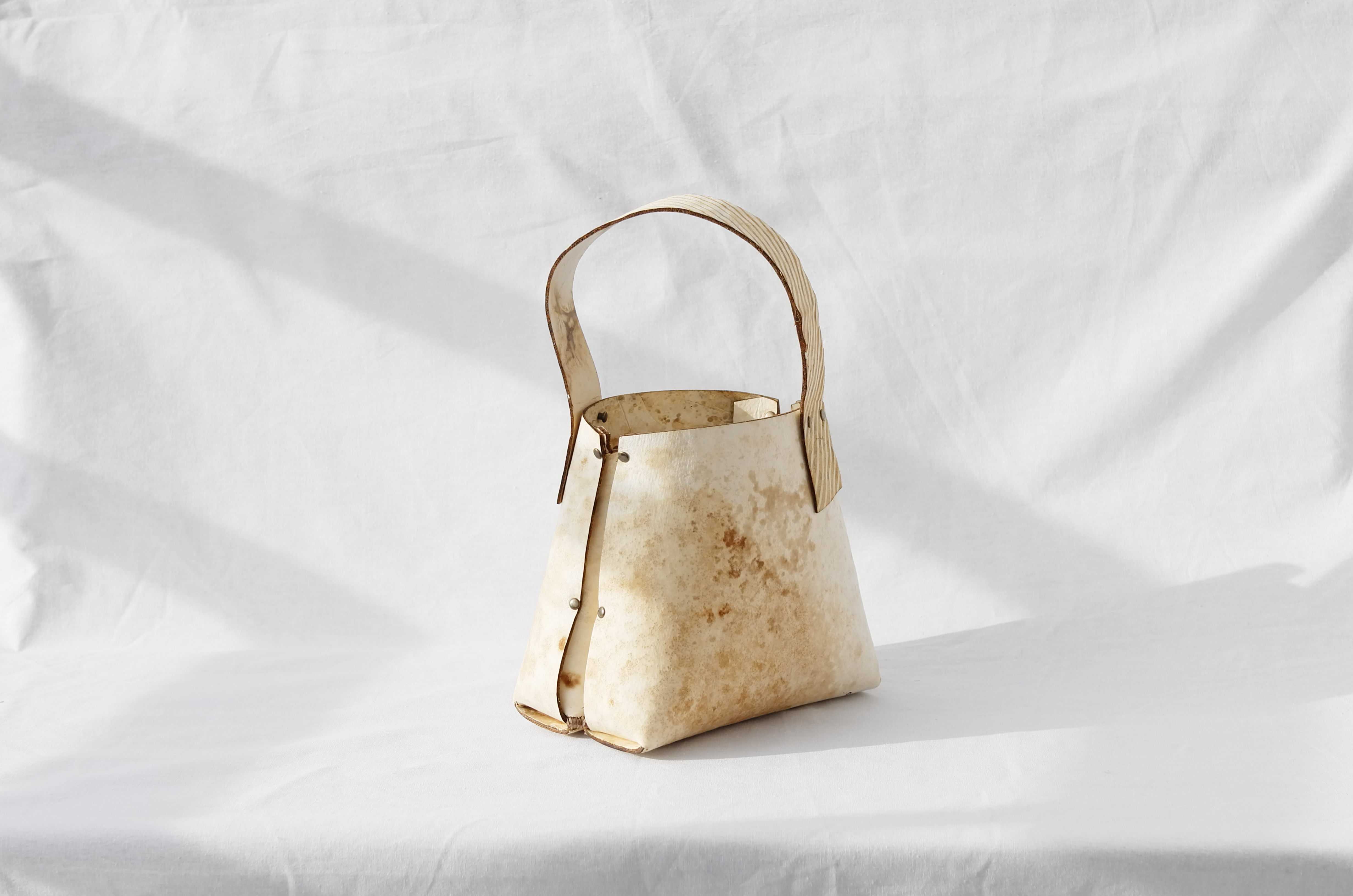
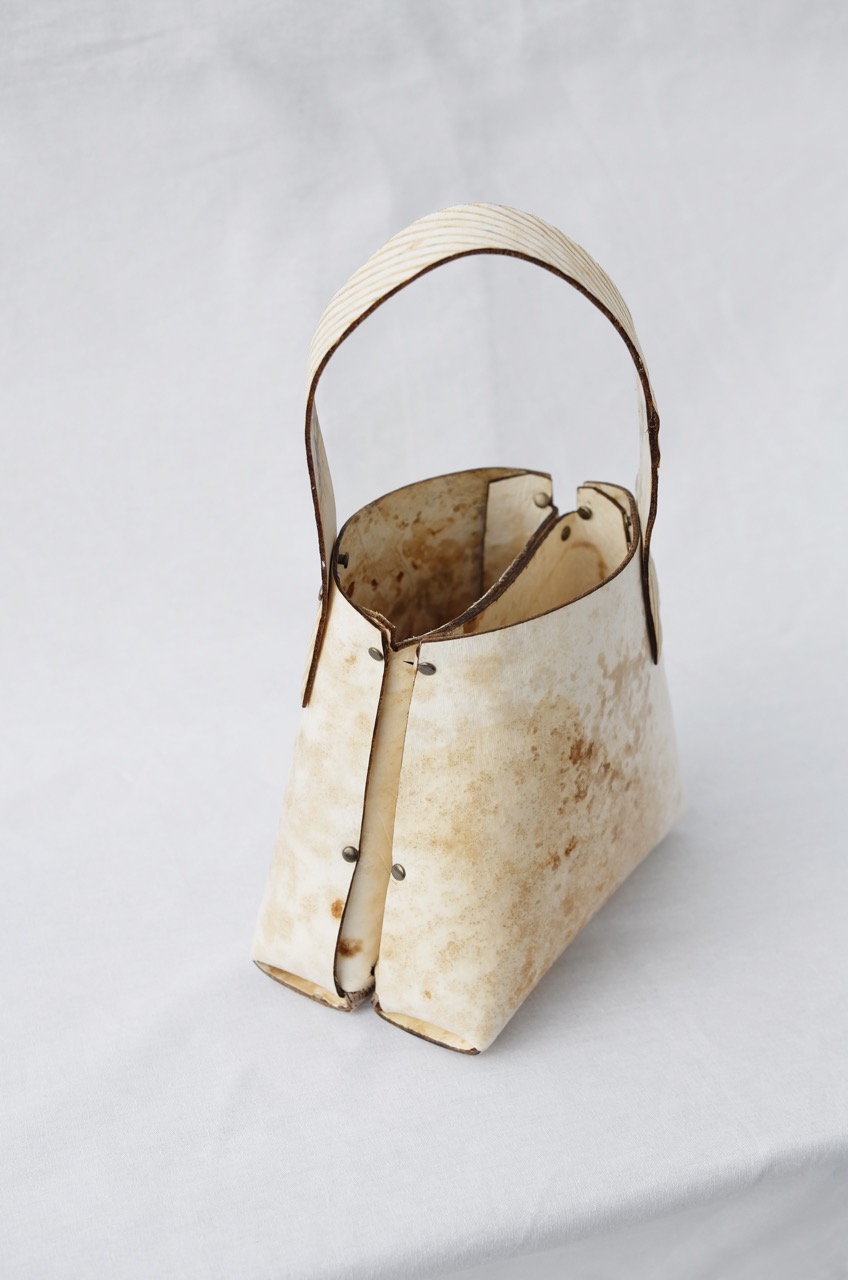
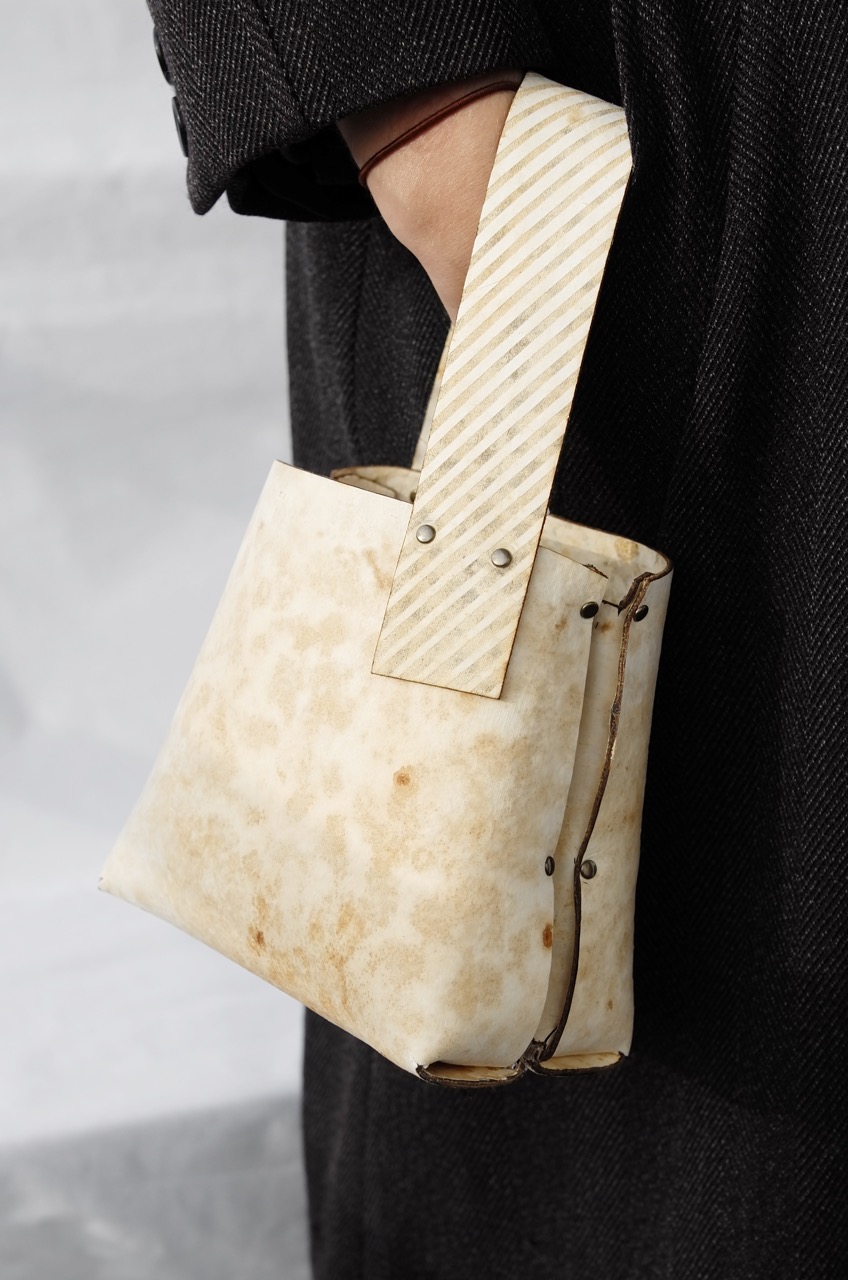
The Mycelium Bag was developed within the Microbiology Research Group at VUB (MICR) in collaboration with Dr. Simon Vandelook, as a proof of concept for his doctoral research into mycelium-based materials, financed by the Research Foundation Flanders (FWO). A central challenge in this field is structural integrity; mycelium-based materials are often reinforced with plastics or other non-bio-based components to compensate.
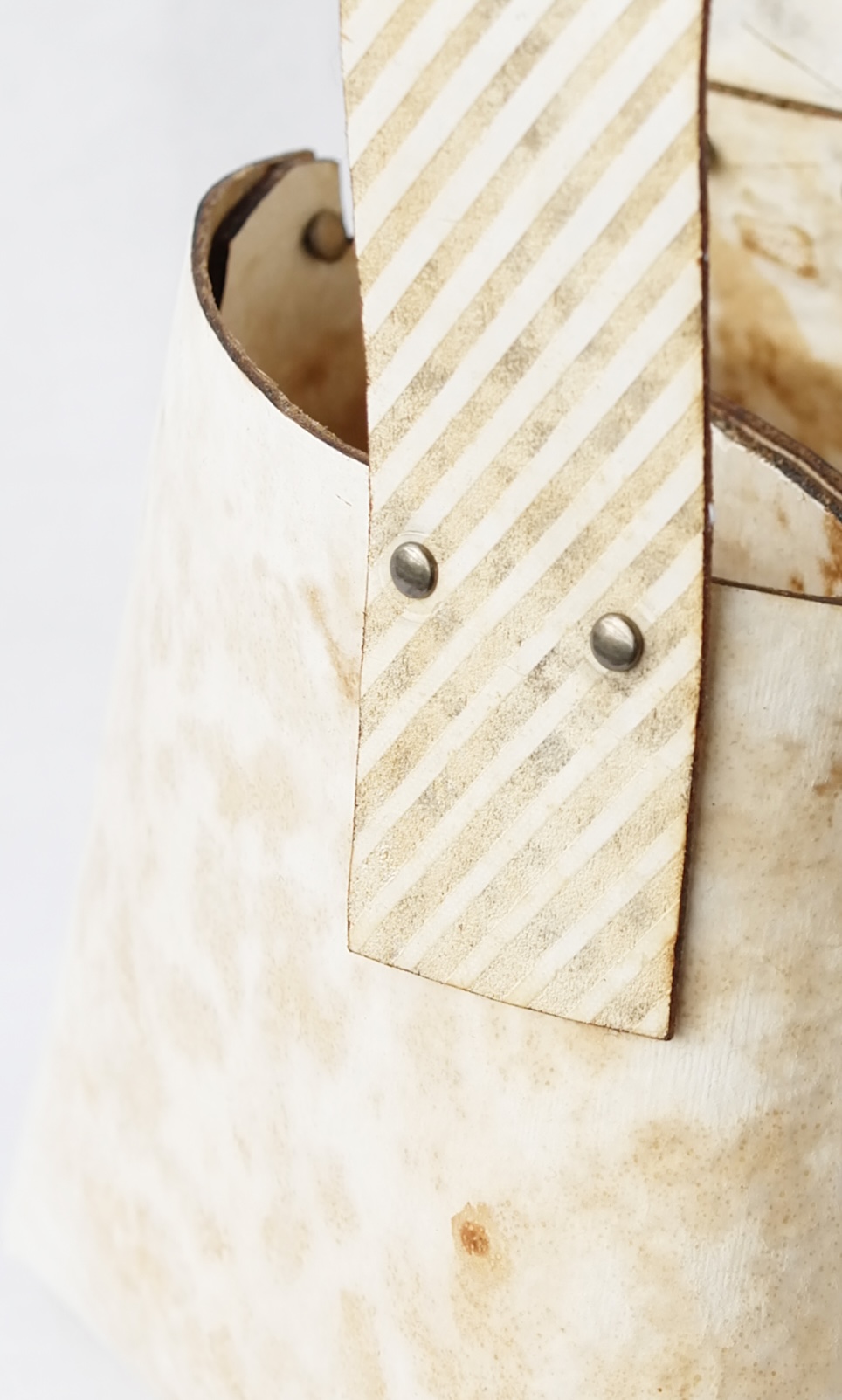
Here, reinforcement was achieved exclusively through bio-based components, making it the first fully bio-based and biodegradable prototype of its kind, with its composition currently patent pending. Laser cutting and engraving techniques were used in its fabrication. While the material is currently heat-treated to halt biological activity, ongoing research at MICR is exploring the possibility of maintaining viable mycelium within the final material, opening the prospect of self-repair.